
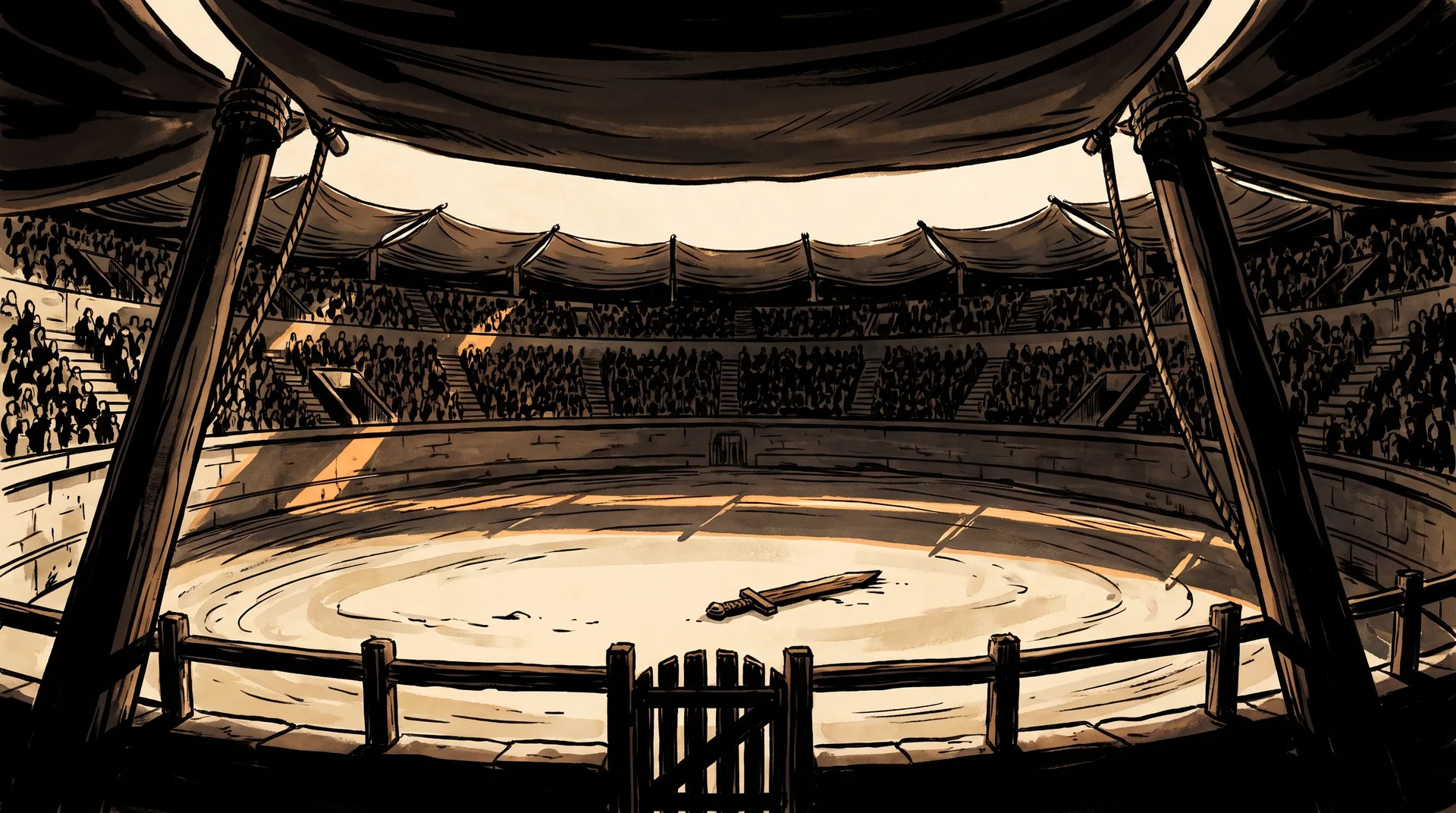
Gannicus and Castus appear late in the war and briefly. Neither is named among the men who broke out of Capua, though both may have been there; the sources only begin to notice them when they take an army away from Spartacus. Gannicus was a Celt. Castus's origin is not recorded, but the men who followed the two of them were Gauls and Germans, as Crixus's had been.
In the winter of 71 BC, with Crassus's wall across the toe of Italy behind them and Crassus's legions in front, the Gauls and Germans separated from the main army for the second time in the war. They camped by a lake in Lucania. Crassus attacked them there, and Spartacus arrived in time to save them once. He did not arrive the second time.
Cantenna
The place is called Cantenna by Frontinus, who preserves the tactic. Crassus sent two of his officers, Pomptinus and Marcius Rufus, round a mountain with twelve cohorts during the night, and attacked from the front while they came down from behind. Plutarch says twelve thousand three hundred of the enemy died, and that only two of them were found wounded in the back: the rest had stood and fought where they were. Livy's summary gives the dead as thirty-five thousand and names the two leaders among them. The numbers cannot both be right and there is no way to choose.
Whichever figure is true, it was the end of the second army and the beginning of the end of the first. Within weeks Spartacus was dead at the Silarus.
Sources
- Plutarch, Life of Crassus 11.
- Frontinus, Stratagems 2.4.7 and 2.5.34.
- Livy, Periochae 97.
Checked against the sources on 2026-09-07. Where two ancient authors give different numbers, both are given.