
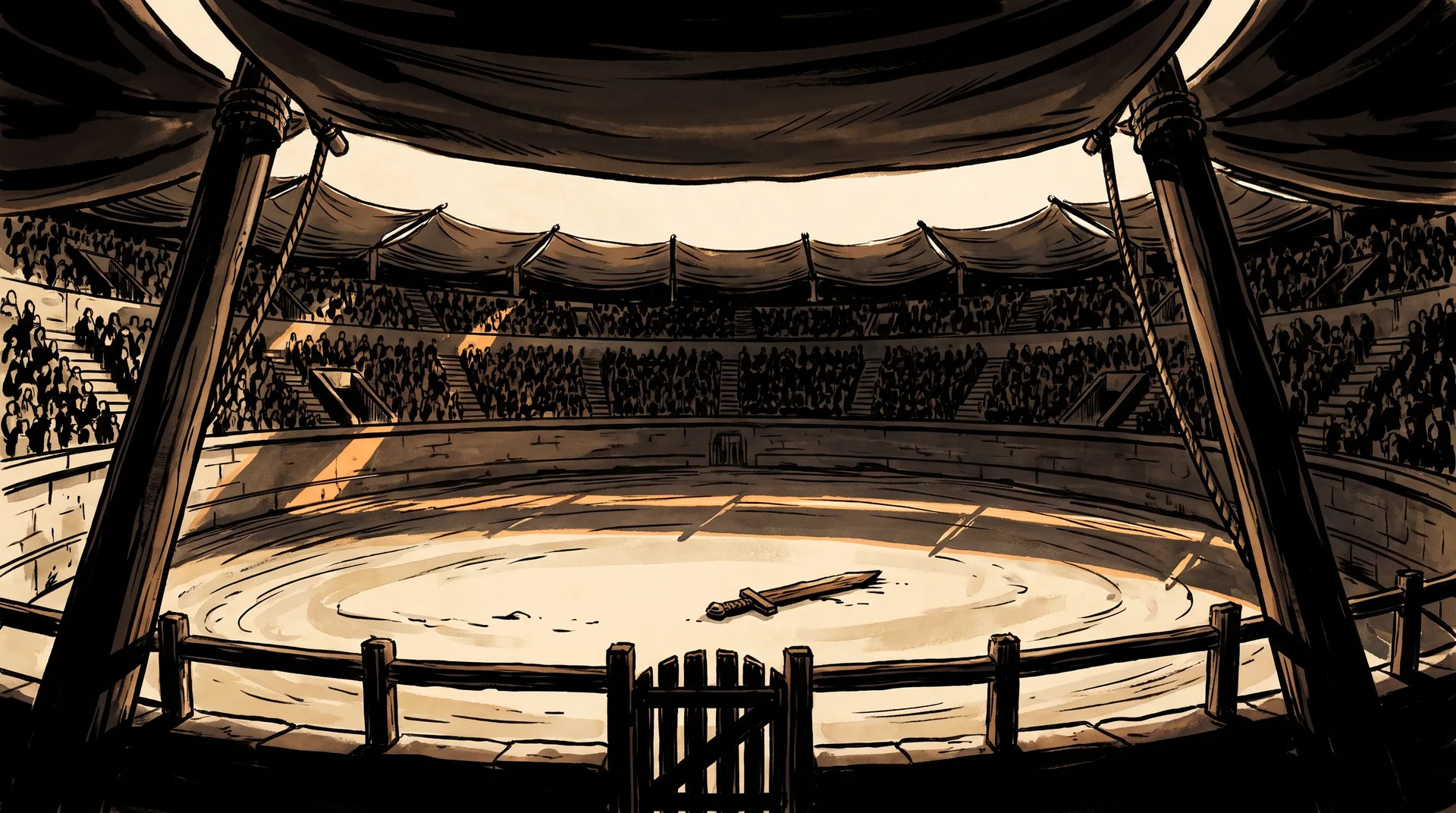
A gladiator management gameThe Houses of Capua
You are the lanista. You are in debt, beneath everyone whose favour you need, and you own six men whose deaths are your only product. Keep the house standing, one week at a time.
Free to Midsummer · no account · on a phone or a desk · English and Deutsch · plays offline once loaded
The week
Winning fights is not the game. Getting into the right fights is.
One turn is one week and a year of games is forty of them. A house that survives its first year carries into the next, with the same men, the same debt and the same grudges. Each week you set the training, spend your afternoons in the city, read what the trainer and the bookkeeper have to say, and send the week on. Every few weeks there is a games day, and a card of at least ten places that four houses want.
The arena is where your assets get destroyed. The villa, the market, the moneylender and the magistrate’s dinner table are where you make money. You may always attempt; you may never be certain. Coin and favour bend the odds and never buy the result, so a failed bribe is not a refund. It is a rumour.
- Four stats a man is asked about on the sand.
- Traits you learn one at a time, and some too late.
- Four standings: the mob, the patricians, the underworld, the gods.
- Suspicion, counted per rival house.
- The caves under the city, where the purses are worse and the rules fewer.
- An uprising, if you get greedy.
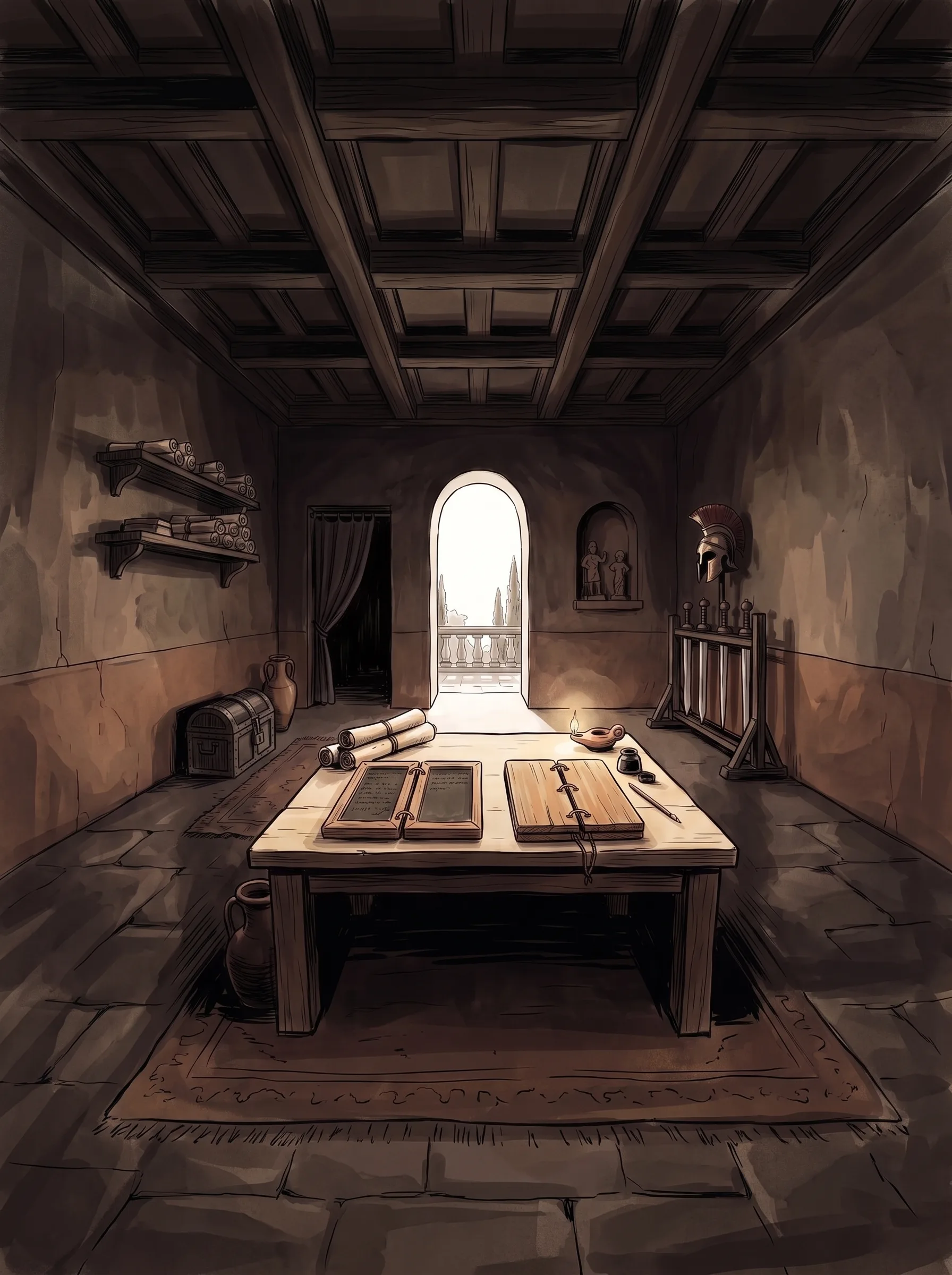
The men
Six of twenty-eight, written rather than rolled.
Every season founds the house on six of twenty-eight written men, each with a face, a nation, a style, and one loud trait the house already knows about. Three of them carry names out of Plutarch’s account of the war.
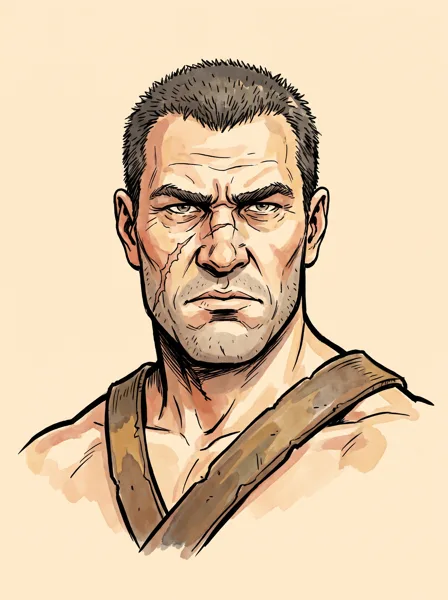
Crixus
A Gaul, thirty-three, a murmillo. Past his prime and knows it. Does not stop when the other man is done.

Spartacus
A Thracian, twenty-four, a thraex. Young enough to still be angry about it. Dreams of rebellion, and the house knows.

Gannicus
A Celt, twenty-six, a dimachaerus. In his prime and drinking through it. Drunk, unbeatable, a problem.
The city
Four houses, one card.
Capua has four houses: Batiatus, which you inherit, and Titus, Vulpio and Baloneus, which do not want you to have it. Each has its own trainer, bookkeeper and spouse, and each schemes against you with the same verbs you use against them. Fail, and the house you failed against stops guessing and names you.
Alone, the three rivals are the game’s. At a table, they are three other people, and the week resolves on the server when the last of you has sent it. An empty chair plays for itself.
Every Monday there is a weekly house: one founding hand, the same for everyone, one attempt, and a board that says who did what with it.
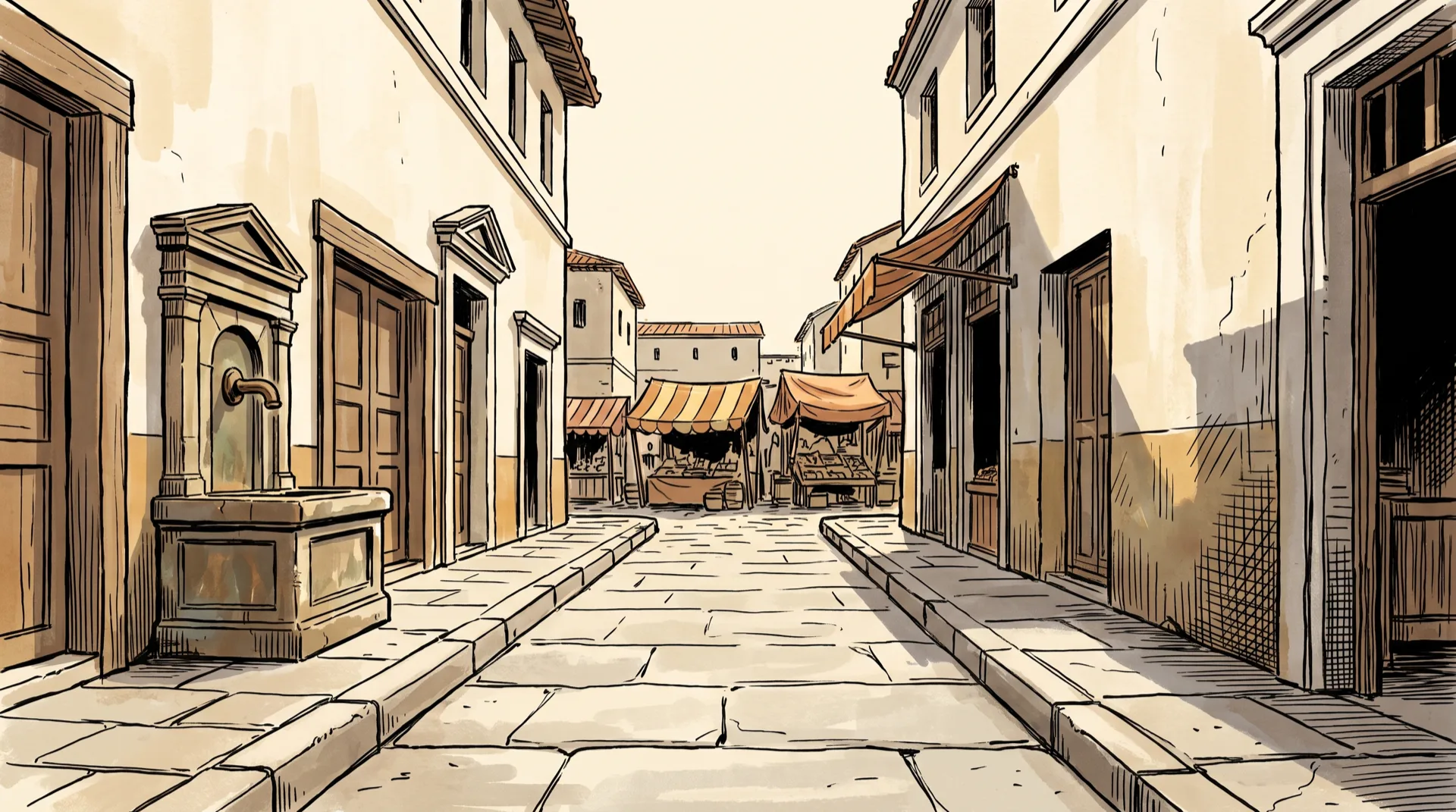
The history
The people are real. The sources are short.
Batiatus owned the school. Spartacus, Crixus and Oenomaus led the men out of it. Gannicus and Castus died at Cantenna, and Crassus put six thousand crosses on the road to Rome. Each has a page here that says what Plutarch, Appian and the rest wrote, and where they disagree.
- Lentulus Batiatus, the lanista of CapuaThe man who owned Spartacus. One paragraph in Plutarch is nearly everything that survives of him.
- Spartacus, the Thracian in Batiatus's schoolNo one who knew him wrote about him. Here is what the people who came after him said.
- Crixus, the Gaul who leftHe commanded thirty thousand men and lasted a year. Spartacus buried him with three hundred Roman prisoners.
- Oenomaus, the third leaderThree men led the escape from Capua. This is the one history forgot to finish.
- Gannicus and Castus, the last breakawayTwelve thousand three hundred dead, Plutarch says, and only two of them wounded in the back.
- Crassus, the man who ended itThe richest man in Rome took the job nobody wanted, and got a lesser honour for it.
- The Third Servile War, 73 to 71 BCTwo years, from a kitchen in Capua to the road outside it.
- What a ludus was, and what a lanista didThe school was a business. This is how the business worked.
- The gladiator types: murmillo, thraex, hoplomachus, retiarius, dimachaerusA gladiator was not a swordsman. He was a kind of swordsman, and the kind decided who he fought.
- Capua, the city of the schoolsRome watched the games. Capua made the men.
Questions
What people ask before they press Play.
- What kind of game is The Houses of Capua?
- A turn-based management game. One turn is one week, a year of games is forty weeks, and a house that survives one year goes on into the next. You run a gladiator school in Roman Capua: the money, the men, the card, and the people whose favour you need. It is closer to a football manager or a Fugger trading game than to an action game. You never swing a sword yourself; from your box you can play to the crowd, call for a man’s guard, or pay for an opening, and that is all.
- Is it free?
- The first half of a year is. It runs in the browser at housesofcapua.com with no download, no account and no payment, and it plays to the Midsummer Card in week nineteen — six games days, and long enough to lose the house twice over. The rest of the year and the years after it are the paid game, coming to Steam. Nothing you build in the browser is thrown away when you buy it.
- Does it play on a phone?
- It was designed on one. Add it to the home screen and it opens like an app, portrait, and it keeps working without a connection once it has loaded.
- Is it multiplayer?
- It can be. A table seats four houses, one per player, and the week resolves on the server when everyone has sent their orders. An empty seat is played by the game. There is also a weekly house: the same founding hand for everyone, one attempt, and a board of who did what with it.
- Is it historically accurate?
- The people are. Batiatus, Spartacus, Crixus, Gannicus, Oenomaus, Castus and Crassus are in Plutarch, Appian, Florus, Livy and Orosius, and the history pages on this site say what those sources say. The households, the rival houses and the games calendar are invented for the game.
- What languages?
- English and German. The whole game is written in both.